
4.3(28)
Beep Me Plumbing & Heating
New Orleans, LA
- Drain Cleaning
- Leak Detection & Repair
- Plumbing Repair
~2 mi (approx.)
CallFound 11 local pros· Pricing updated Apr 2026
Compare leak detection & repair contractors serving New Orleans and Orleans Parish. Read ratings, confirm Louisiana licenses, and contact pros directly — free for homeowners.
Sorted by distance from New Orleans. Enter your ZIP above to sort by your exact location.
New Orleans, LA
~2 mi (approx.)
Call 24/7
24/7New Orleans, LA
~2 mi (approx.)
CallNew Orleans, LA
~2 mi (approx.)
CallNew Orleans, LA
~3 mi (approx.)
CallNew Orleans, LA
~5 mi (approx.)
Call24/7New Orleans, LA
~6 mi (approx.)
Call 24/7
24/7Metairie, LA
~7 mi (approx.)
Call24/7New Orleans, LA
~7 mi (approx.)
Call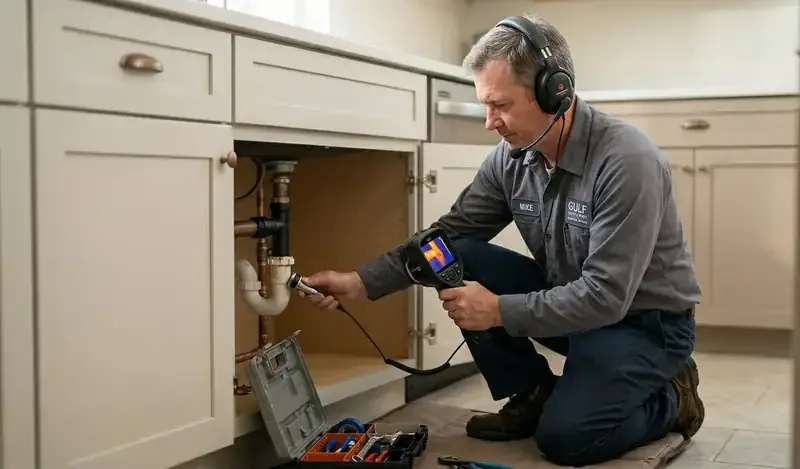
Harahan, LA
~7 mi (approx.)
CallHarahan, LA
~8 mi (approx.)
CallAll home services in New Orleans · Leak Detection & Repair across Louisiana
Leak detection in New Orleans is complicated by the same conditions that make the city distinctive: the mix of housing types, the high water table, and the prevalence of century-old infrastructure in older neighborhoods. A leak in a 1920s shotgun on raised piers requires different detection techniques than a leak in a 1960s slab home in Lakeview, and the cost and complexity of repair vary accordingly.
Professional leak detection in New Orleans runs $295 to $725 for a single-location detection job. The diagnostic uses a combination of acoustic listening, thermal imaging, and pressure testing — the same equipment used elsewhere, but the work tends to take longer in older homes because of access constraints and the more complex pipe routing in century-old buildings.
Repair costs vary widely. Simple supply line repair in a wall runs $450 to $1,100. Slab leak repair in mid-century Lakeview, Gentilly, or Algiers runs $1,800 to $4,500. Crawlspace pipe repair under a raised pier home runs $600 to $2,500 depending on access. Many local leak detection companies credit part or all of the detection fee toward repair work if you proceed with the same company.
In raised-pier homes — most pre-1940 shotguns, doubles, and cottages — leaks under the home are usually visible during inspection because the crawlspace is accessible. Detection costs are lower because you don't need acoustic equipment to find what you can see. The catch is that crawlspace work is physically difficult and time-consuming, so repair costs may not be lower than slab work.
In slab-on-grade homes — most post-1960 Lakeview, Gentilly, Pontchartrain Park, and Algiers construction — leaks beneath the slab require the full acoustic-thermal-pressure detection workflow. Symptoms include warm spots on tile floors, unexplained spikes in water bills, the sound of running water when no fixture is on, and reduced overall water pressure.
In elevated post-Katrina rebuilds, plumbing systems are typically modern PEX with PVC drains, and leaks are most often fixture-level rather than supply-line. Detection is straightforward and repairs are usually quick.
For older homes, the dominant factor is age — galvanized supply lines installed 60+ years ago corrode from the inside out and eventually fail. Cast-iron drains crack as they corrode. For mid-century slab homes, the issue is similar to Baton Rouge: slab-embedded copper supply lines develop pinhole leaks over decades, and the soil movement common to coastal Louisiana stresses joints. For homes near the lake or river, salt-air exposure and consistently high humidity accelerate corrosion in any exposed metal pipe.
The best leak detection companies own (rather than rent) their equipment, hold current Louisiana plumbing licenses, and can perform both detection and repair in-house. Coordination matters — when detection and repair happen in the same crew, less information gets lost between teams. Check the company's current Louisiana plumbing license yourself before work starts — companies that complete our verification process carry a Verified badge. Comparing options first? See our ranked guide to the best plumbers in New Orleans.
New Orleans sits below sea level inside Orleans Parish, where 95% humidity and year-round subtropical heat put extraordinary stress on home cooling, ventilation, and plumbing systems. The city's housing mix runs from 19th-century Creole cottages and shotgun houses in the Marigny and Bywater to mid-century ranch homes in Lakeview and modern construction in Lower Garden District infill projects. Most older homes have ductwork in unconditioned attics, original cast-iron drain lines, and electrical service that predates ground-fault requirements. Post-Katrina elevation requirements have driven a wave of crawlspace conversions and slab work, while regular hurricane season demands resilient HVAC and electrical infrastructure. Homeowners across Mid-City, Uptown, Algiers, and the French Quarter share common service needs: humidity-resistant air handling, sewer line repair through tree-root-heavy yards, mold-aware air duct cleaning, and licensed electrical work that meets Orleans Parish code. GulfServicePros lists established New Orleans companies with ratings shown, so you can compare pros who understand the city's building stock, parish permit process, and climate-driven service patterns. Contractors that complete our verification process carry a Verified badge.