
 24/7
24/74.9(67)
Pro Plumbing
Baton Rouge, LA
- Gas Line Services
- Leak Detection & Repair
- Plumbing Repair
~2 mi (approx.)
CallFound 17 local pros· Pricing updated Apr 2026
Compare leak detection & repair contractors serving Baton Rouge and East Baton Rouge Parish. Read ratings, confirm Louisiana licenses, and contact pros directly — free for homeowners.
Sorted by distance from Baton Rouge. Enter your ZIP above to sort by your exact location.
24/7Baton Rouge, LA
~2 mi (approx.)
Call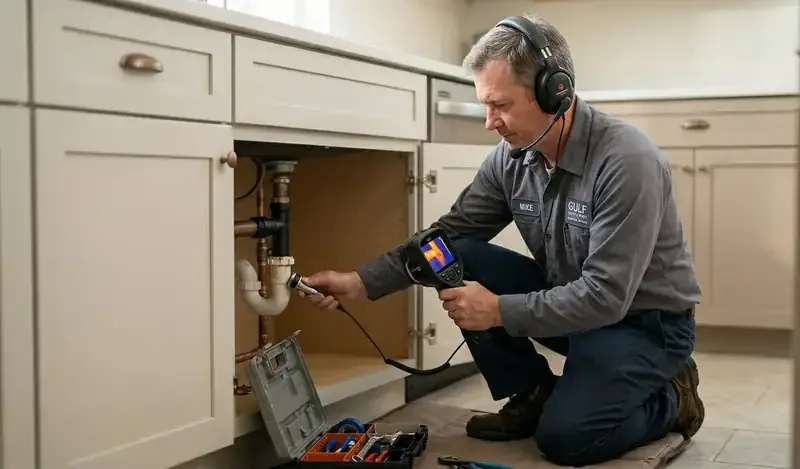 24/7
24/7Baton Rouge, LA
~2 mi (approx.)
Call
Baton Rouge, LA
~2 mi (approx.)
Call
Baton Rouge, LA
~5 mi (approx.)
CallBaton Rouge, LA
~5 mi (approx.)
CallBaton Rouge, LA
~5 mi (approx.)
CallBaton Rouge, LA
~5 mi (approx.)
Call24/7Baton Rouge, LA
~7 mi (approx.)
Call24/7Baton Rouge, LA
~8 mi (approx.)
Call24/7Baton Rouge, LA
~8 mi (approx.)
CallBaton Rouge, LA
~8 mi (approx.)
CallAll home services in Baton Rouge · Leak Detection & Repair across Louisiana
Leak detection in Baton Rouge is a higher-stakes service than most homeowners realize, because the same conditions that drive slab leaks in this city — clay-heavy soil, slab-on-grade construction, seasonal soil movement — also make leaks harder to find. Water can travel along a slab for ten or twenty feet before surfacing, which is why catching a slab leak early often comes down to a homeowner noticing a warm spot on a tile floor or an unexplained 30% jump in the water bill.
Professional leak detection in Baton Rouge runs $250 to $650 for a single-location detection job using acoustic equipment, thermal imaging, and pressure testing. The detection is the diagnostic — the actual repair is separate and depends entirely on what's found and where. A simple supply line repair accessible through a wall might add $400 to $900. A slab leak repair using a re-route around the affected pipe runs $1,500 to $3,500. A full slab tunnel repair under the foundation can exceed $5,000.
Most Baton Rouge leak detection companies will credit some or all of the detection fee toward repair work if you proceed with the same company. This is worth asking about upfront.
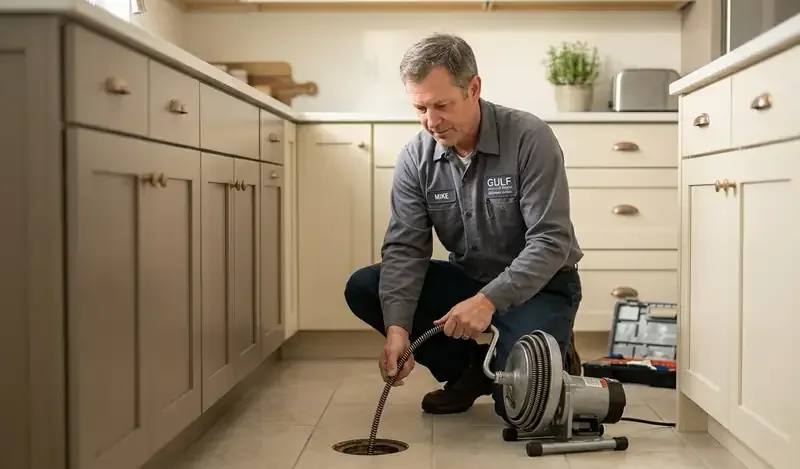
The detection process typically combines three techniques. Pressure testing isolates sections of the plumbing system by closing valves and watching whether pressure holds — this confirms a leak exists and narrows down the section. Acoustic listening uses sensitive microphones placed against the floor or pipes to hear water escaping under pressure. Thermal imaging identifies temperature differences caused by hot or cold water leaks beneath floors and inside walls. A skilled technician uses all three in combination to pinpoint a leak location to within a foot or two before any cutting starts.
Slab leaks specifically require this level of precision because cutting into the slab is expensive and disruptive. The difference between locating a leak to the wrong room and locating it precisely can mean the difference between a $1,500 repair and a $4,000 repair.
Three factors converge to produce Baton Rouge's elevated slab leak rate. The clay-heavy soil throughout East Baton Rouge Parish expands when wet and contracts when dry, producing seasonal soil movement that stresses any pipe joint embedded in or beneath the slab. The vast majority of homes built since the 1960s sit on slab-on-grade foundations with copper or galvanized supply lines routed through the slab — both materials degrade over decades when surrounded by moist soil. And the long warm season means hot water lines run more, which accelerates copper pinhole leak development.
If you have a Baton Rouge home built between 1965 and 1990 and you're seeing unexplained increases in water bills, warm or damp spots on tile floors, or you can hear water running when no fixture is on, schedule leak detection sooner rather than later.
Look for companies that own (rather than rent) acoustic and thermal detection equipment, hold current Louisiana plumbing licenses, and can perform both the detection and the repair under one roof. Coordination between detection and repair matters — if the detection technician isn't the one doing the repair, information gets lost. Ask whether the company owns its detection equipment rather than renting it, and check its Louisiana plumbing license yourself — companies that complete our verification process carry a Verified badge.
Baton Rouge anchors East Baton Rouge Parish along the Mississippi River, with a metro area defined by clay-heavy soil, a high water table, and average July humidity above 80%. The city's housing stock spans 1940s-50s ranch construction in Mid City, 1970s-80s subdivisions across Sherwood Forest and Tara, postwar bungalows in Spanish Town, and newer slab-on-grade builds in Shenandoah and the I-10 corridor. Slab foundations on expansive clay soil produce a higher rate of slab leaks and foundation-related plumbing issues than most other Louisiana cities, while heavy summer storms regularly overwhelm aging drainage. The presence of LSU and Southern University drives steady rental-market turnover, generating consistent demand for cleaning, locksmith, and quick-turn HVAC service. Baton Rouge homeowners also navigate distinct East Baton Rouge Parish permit requirements for HVAC replacement, water heater swaps, and electrical panel upgrades. GulfServicePros lists established Baton Rouge companies with their ratings shown, so you can compare pros who understand the local soil, climate, and code environment — and check any company's Louisiana State Licensing Board for Contractors credentials yourself. Contractors that complete our verification process carry a Verified badge.