
Hurricane Season Home Prep Checklist for Louisiana Homeowners
A practical, contractor-tested checklist for getting your Louisiana home ready before the storm — generators, plumbing, electrical, and what to do after.
GulfServicePros Editorial — pricing and licensing details cross-checked against LSLBC records before publication
Hurricane season runs from June 1 through November 30, but the storms that produce real damage tend to cluster between mid-August and late October. The window for actually preparing your home is the spring and early summer — by the time a named storm enters the Gulf, every contractor in Louisiana is fully booked, and the work you needed done two months ago is now impossible to schedule.
This is a practical, contractor-tested checklist for what to do, when to do it, and what it costs.
Three months out (March-May): the foundational work
If you do nothing else, do these three things in spring while contractors have availability and standard pricing.
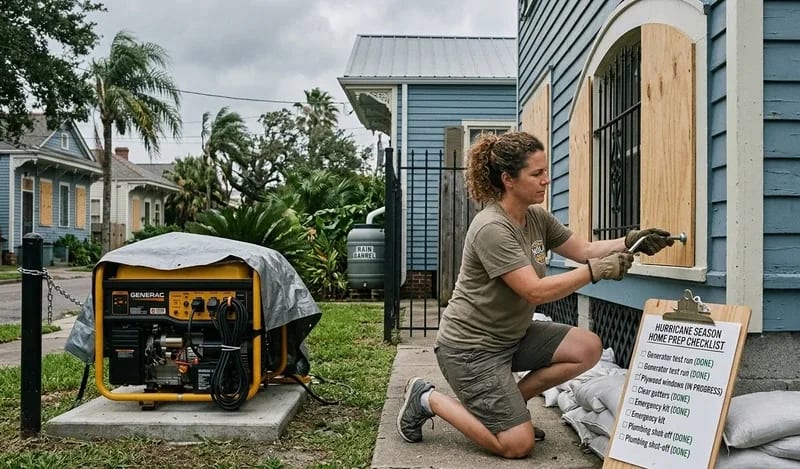
1. Generator decision and installation
Multi-day power outages are routine after major Louisiana storms. The 2020 Hurricane Laura aftermath produced outages exceeding 30 days in parts of Lake Charles. Even less severe storms produce 3-7 day outages across affected parishes.
Whole-home standby generator: $4,500-$12,000 installation + $4,000-$10,000+ generator cost. Wired to a transfer switch and powered by natural gas or propane. Starts automatically within 30 seconds of power loss. Powers the entire home for the duration of the outage as long as fuel holds.
Portable generator with manual transfer switch: $800-$2,500 installed + $400-$2,000 generator cost. Less expensive but requires manual operation, gasoline storage, and outdoor placement during use. Powers essential circuits only.
Just a portable generator with extension cords: $400-$1,500 generator cost. Powers individual appliances. Doesn't work for most permanently-wired equipment (HVAC, well pumps, etc.).
For whole-home standby installation, plan for 8-12 weeks lead time including permits, gas line work (if needed), and the manufacturer install schedule. Spring booking is essential — fall booking after a forecast appears is impossible.
2. HVAC inspection and protection
Outdoor condenser units are vulnerable to wind damage and flying debris. A pre-season HVAC tune-up ($90-$175) catches refrigerant or electrical issues that would compound during heavy use after a storm, and the technician can advise on protective measures.
For coastal homes and homes in low-lying flood zones, consider:
- Hurricane straps for outdoor condensers (some manufacturers require these for warranty)
- Elevated condenser pads in flood-prone areas
- Surge protection at the condenser disconnect to protect the unit from electrical surges during restoration
3. Tree and gutter work
Falling trees and limbs cause more home damage during Louisiana storms than direct wind in many cases. Tree pruning and removal of dead or compromised trees should happen in spring; arborists, like contractors, are unavailable once a storm is named.
Gutter cleaning ensures heavy rainfall actually drains rather than overflowing into walls or foundation areas. Schedule this for May.
One month out (June-July): the medium-term prep
Plumbing checks
- Water heater straps (especially gas water heaters, to prevent gas line damage if the unit shifts)
- Sump pump test and battery backup installation for homes with sump systems
- Backflow preventer inspection if your home has one — these can fail and allow sewer backup during heavy rain
- Outdoor faucet and irrigation shutoff valve location — know where these are before you need them
Electrical checks
- Surge protector inspection at the main panel (whole-home surge protection runs $300-$700 installed and protects every circuit during restoration surges)
- GFCI outlet test in kitchens, bathrooms, garages, and outdoor locations
- Outdoor outlet covers confirmed weatherproof
- Smoke and CO detector battery replacement (CO detectors specifically matter — generator-related CO poisoning kills more people in Louisiana every year than direct storm damage)
Document and inventory
- Photo documentation of your home interior, exterior, and contents for insurance claims
- Insurance policy review including hurricane deductibles and flood coverage (standard homeowners policies don't cover flooding — flood insurance is separate)
- Important documents in a waterproof container or scanned to cloud storage
When a storm enters the Gulf (3-5 days out)
At this point, your prep should already be done. The remaining work:
- Fuel up the generator and store backup fuel safely (outside, away from living spaces)
- Charge all phones, laptops, and battery banks
- Fill bathtubs and large containers with water (for toilet flushing if water service is disrupted; not for drinking unless treated)
- Move outdoor furniture, grills, and loose items inside or secure them
- Lower pool water level to prevent overflow into nearby foundations
- Park vehicles in garage or higher ground away from large trees
During the storm
- Stay inside and away from windows. Most hurricane injuries are from flying glass and debris.
- Don't run a portable generator inside or in an attached garage. CO poisoning is a routine cause of hurricane-related deaths.
- Don't use candles for lighting if possible — battery LED lanterns are dramatically safer.
- Document any damage as it occurs if you can do so safely.
After the storm: what to do first
Immediate (first 24 hours)
- Assess your home from the outside before re-entering. Look for downed power lines, structural damage, and gas leaks (smell, hissing).
- Don't turn on electrical service to a flooded home. Wait for electrical inspection.
- Don't use water from any source you can't verify — boil-water advisories are common after major storms.
- Document all damage with photos before any cleanup or repair begins. Insurance claims depend on this.
First week
- Schedule electrical inspection before reconnecting power to any circuit that was wet
- Schedule HVAC inspection before running systems that may have been water-damaged or surge-damaged
- Schedule plumbing inspection if you experienced sewer backup or suspect any damaged lines
- File insurance claim with photo documentation
First month
- Mold inspection and remediation if any portion of the home was wet for more than 24 hours
- Roof inspection even if no obvious damage — wind can lift shingles without making damage visible from the ground
- Tree damage assessment for any trees that lost significant limbs or shifted in the soil
What it costs after a storm vs. before
The cost difference between pre-season and post-storm scheduling is dramatic:
- Generator installation: Standard pricing in spring; 30-50% above standard pricing after a major storm hits the region, with lead times of 6+ months
- Tree removal: Standard pricing in spring; emergency pricing 100-200% above standard after a storm
- Roof repair: Standard pricing year-round; doubled or tripled after a storm with weeks-to-months waits
- Electrical inspection: Standard rates in spring; emergency rates and multi-week waits after a major event
This is why spring prep saves both money and time. Every item on the foundational checklist is dramatically more expensive and slower to schedule after a storm than before.
Ready to schedule pre-season work?
GulfServicePros lists established local companies across Louisiana for the full range of hurricane prep work. For generator installation, browse electrical installation in New Orleans. For HVAC inspection and tune-ups, see HVAC installation in New Orleans or the full list of HVAC contractors in Kenner. For Chalmette and St. Bernard Parish homeowners, see electrical repair in Chalmette and plumbing repair in Chalmette. For plumbing checks, see plumbing repair in New Orleans or Baton Rouge.
Common questions
- When should I prepare for hurricane season in Louisiana?
- Foundational work should happen March-May, before contractors get fully booked. Medium-term prep happens June-July. By the time a storm enters the Gulf (3-5 days out), only minimal last-mile prep is realistic.
- How much does whole-home generator installation cost?
- $4,500-$12,000 for installation plus $4,000-$10,000+ for the generator itself. Includes transfer switch, gas line work if needed, concrete pad, and permits. Plan 8-12 weeks lead time.
- Is a portable generator enough for hurricane prep?
- Portable generators with manual transfer switches ($800-$2,500 installed plus $400-$2,000 for the generator) power essential circuits but require manual operation. Whole-home standby generators are dramatically more convenient and reliable but cost significantly more.
- Will my homeowners insurance cover hurricane damage?
- Standard homeowners insurance covers wind and falling-tree damage but typically does not cover flood damage. Flood insurance is a separate policy through the National Flood Insurance Program or private insurers. Review your policy and hurricane deductible before storm season.
- What's the most dangerous mistake during a power outage?
- Running a portable generator inside or in an attached garage. Carbon monoxide poisoning from indoor generator use is a routine cause of hurricane-related deaths in Louisiana. Always operate portable generators outside, well away from windows and doors.
- How fast can I get repairs after a storm?
- Post-storm contractor scheduling runs weeks to months for major work, with pricing 30-200% above standard. This is why spring prep saves both money and time — generator installation in March costs standard rates with 8-12 week lead times; the same installation after a storm hits costs much more with a 6+ month wait.
- What should I do first after a hurricane?
- Assess your home from outside before re-entering — look for downed power lines, structural damage, and gas leaks. Don't turn on electrical service if any portion was flooded. Document all damage with photos before cleanup. File insurance claim with photo documentation.
About this guide
This guide is filed under “Electrician” for Louisiana and Gulf Coast homeowners who want plain-language context before they call a licensed pro. Details in the body go deeper than a headline; any dollar figures or timelines are illustrative. Confirm scope and price in writing with the contractor you choose.